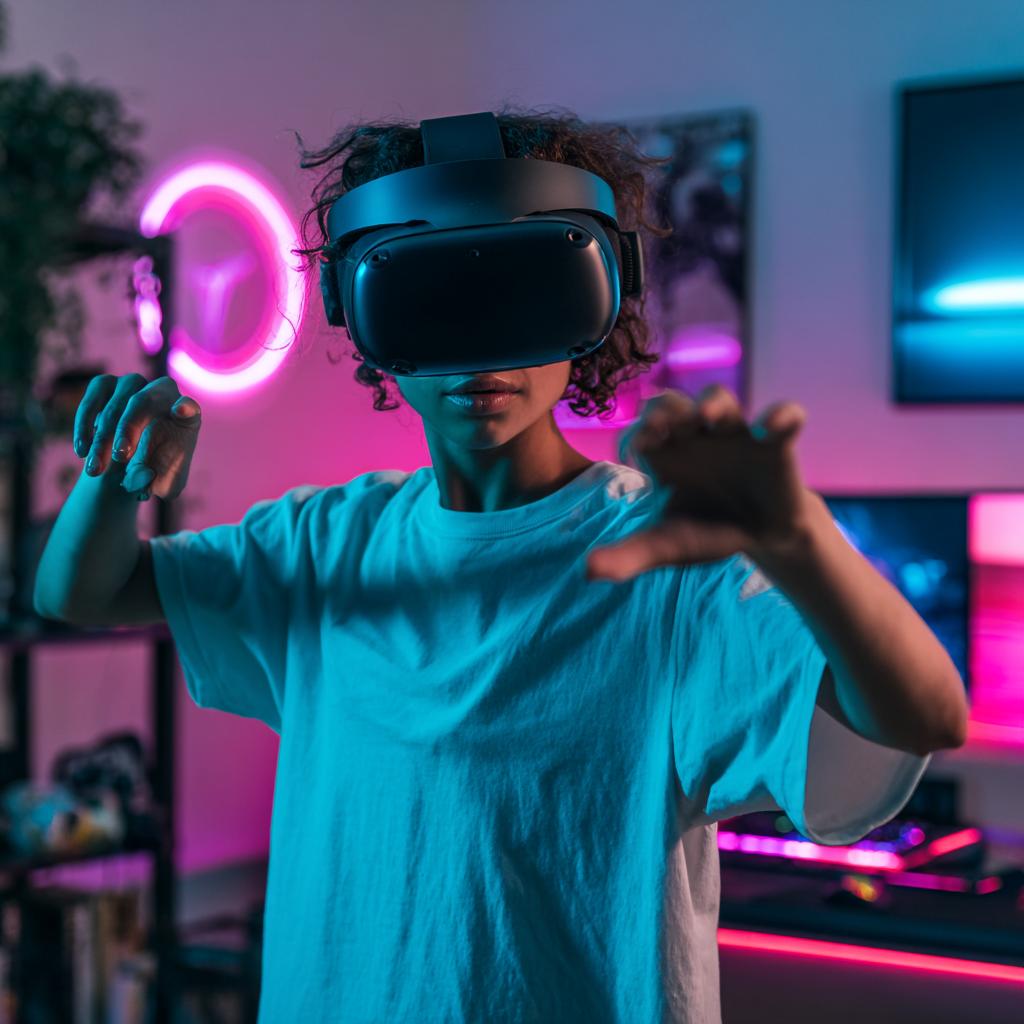
The Meta Quest 3 represents the pinnacle of standalone virtual reality in 2025, delivering significantly improved graphics, mixed reality capabilities, and refined comfort over its predecessor. Starting at $499 for the 128GB model, this third-generation headset combines powerful Snapdragon XR2 Gen 2 processing with pancake lenses and color passthrough to create the most compelling VR experience available without requiring a gaming PC. After extensive testing across gaming, fitness, productivity, and mixed reality applications, we evaluate whether the Quest 3 justifies its position as the recommended VR headset for most users.
Design and Comfort
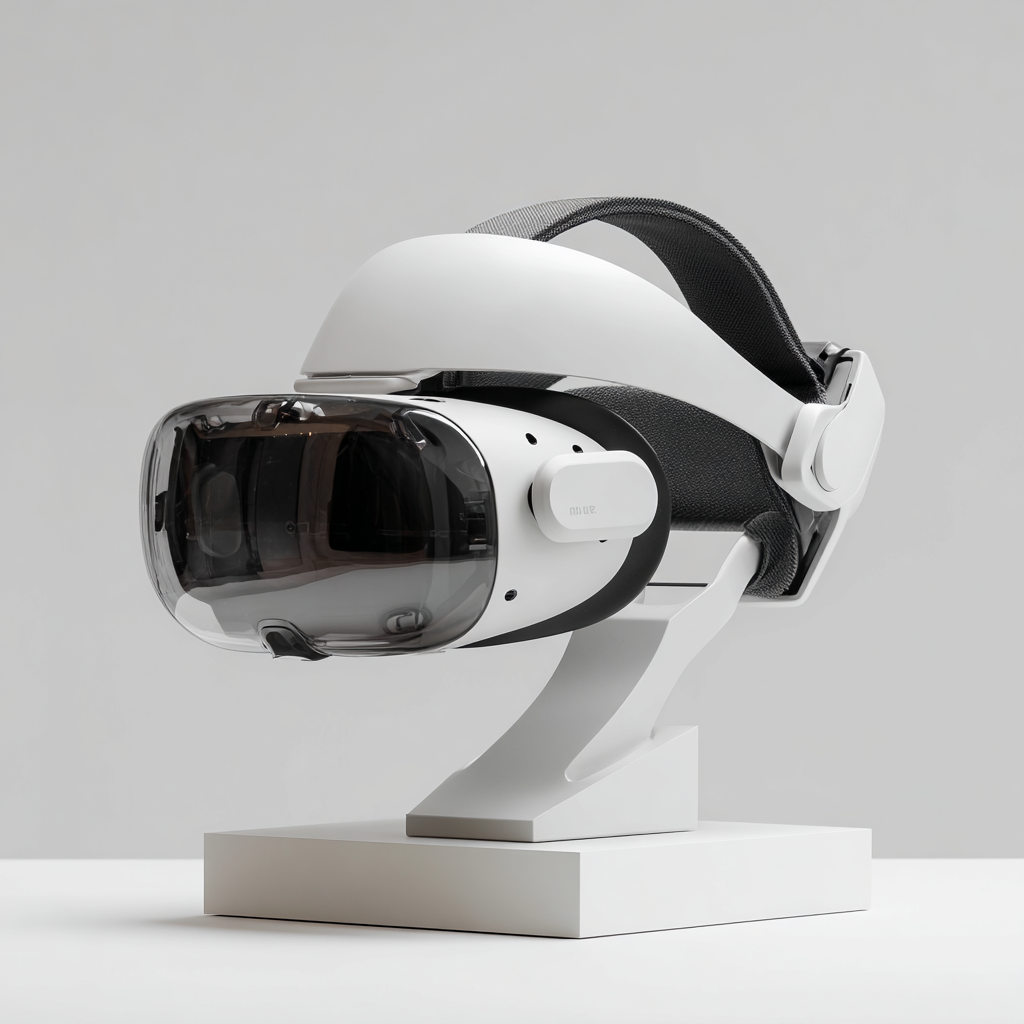
The Quest 3 adopts a sleeker, more refined design compared to the Quest 2. Meta reduced the headset depth by 40% through pancake lens technology, creating a more compact profile that balances better on your head. At 515 grams, the headset weighs slightly more than Quest 2 but distributes weight more effectively, reducing pressure on the forehead and cheeks.
The soft fabric interface conforms comfortably to various face shapes, though Meta continues selling separate facial interfaces for optimal fit. The adjustable head strap with rear dial enables finding secure, comfortable positioning for extended play sessions. For maximum comfort, upgrading to Meta's Elite Strap or third-party comfort mods proves worthwhile for users planning serious VR time.
Improved ventilation reduces fogging during intense activity. The gap between face and lenses enables airflow that keeps lenses clear during Beat Saber sessions or VR fitness workouts. The breathable fabric interface wicks sweat effectively, maintaining comfort during active gaming.
Visual Quality: Pancake Lens Revolution
The display upgrade represents one of the Quest 3's most significant improvements. Each eye receives 2064 x 2208 pixels, creating 25% more pixels than Quest 2. However, the pancake lenses deliver the more impactful improvement, providing edge-to-edge clarity across the entire field of view. Unlike Fresnel lenses that blur peripheral vision, pancake lenses maintain sharpness whether you're looking straight ahead or glancing to the sides.
The clarity improvement transforms the VR experience. Text becomes readable without squinting, distant objects maintain definition, and the "screen door effect" virtually disappears. The combination of higher resolution and superior optics creates substantially clearer visuals than previous Quest headsets.
The variable 90-120Hz refresh rate delivers smooth motion. Most experiences run at 90Hz, while select games and experiences support 120Hz for even smoother visuals. The higher refresh rates reduce motion sickness susceptibility and create more immersive experiences, particularly in fast-paced games.
Field of view measures approximately 110 degrees horizontally and 96 degrees vertically, representing modest improvement over Quest 2. While not matching the 130+ degree FOV of high-end PC VR headsets, the Quest 3's FOV suffices for immersive experiences without excessive peripheral awareness of the headset edges.
Performance: Snapdragon XR2 Gen 2
The Snapdragon XR2 Gen 2 chipset delivers substantially more graphics horsepower than Quest 2's XR2 Gen 1. Games look noticeably better with improved textures, lighting, and draw distances. Developers now targeting the Quest 3's capabilities create experiences impossible on previous mobile VR hardware.
Titles like Asgard's Wrath 2 showcase the Quest 3's capabilities with expansive environments, detailed character models, and impressive visual effects. Batman: Arkham Shadow demonstrates AAA-quality graphics running natively on standalone hardware. The performance leap enables experiences that narrow the gap between standalone and PC VR quality.
The increased power benefits existing Quest 2 titles through enhanced versions with better graphics and performance. Games receive Quest 3 updates adding improved textures, higher resolution, better lighting, and smoother frame rates. The backwards compatibility with Quest 2's extensive library ensures immediate access to hundreds of games while new Quest 3-exclusive titles arrive.
Mixed Reality Excellence
Color passthrough cameras represent another major advancement. Unlike Quest 2's grainy black-and-white passthrough, Quest 3 displays your surroundings in full color with improved clarity. While not matching naked eye quality, the passthrough suffices for navigating your space, interacting with objects, and blending virtual elements with reality.
The depth sensor enables accurate environmental understanding, allowing virtual objects to interact realistically with physical surfaces. You can place virtual decorations on real tables, have virtual characters sit on actual furniture, and see virtual projectiles bounce off real walls. This spatial awareness creates convincing mixed reality experiences where virtual and physical seamlessly blend.
Mixed reality applications range from practical to entertaining. You can browse giant virtual screens while remaining aware of your surroundings, play virtual ping pong on your actual table, or have virtual pets interact with your real room. The feature transforms VR from isolating to contextual, enabling longer sessions without complete disconnection from reality.
Technical Specifications
| Resolution | 2064 x 2208 per eye |
|---|---|
| Lenses | Pancake lenses (edge-to-edge clarity) |
| Refresh Rate | 90Hz / 120Hz variable |
| Processor | Snapdragon XR2 Gen 2 |
| RAM | 8GB |
| Storage | 128GB / 512GB |
| Passthrough | Full color, depth sensor |
| Controllers | Touch Plus (no tracking rings) |
| Battery Life | ~2 hours active use |
| Weight | 515g |
| Audio | Integrated spatial audio |
| Price | $499 (128GB) / $649 (512GB) |
Controllers and Hand Tracking
Touch Plus controllers eliminate the bulky tracking rings of previous generations, creating more ergonomic controllers that feel like holding actual objects. The improved tracking works reliably even when controllers move outside your field of view, expanding the range of natural motion during gameplay.
Hand tracking receives substantial improvements enabling controller-free interaction. The system tracks individual fingers with sufficient accuracy for menu navigation, virtual object manipulation, and certain games designed for hand tracking. While not matching controller precision for fast-paced gaming, hand tracking works well for meditation apps, social VR, and UI navigation.
Game Library and Content
The Quest platform boasts the largest standalone VR game library with hundreds of titles across all genres. Beat Saber, Resident Evil 4 VR, Population: One, and countless other experiences provide immediate entertainment. The store features regular sales, and Meta frequently includes games with headset purchases or promotional bundles.
Now that the Quest 3S exists alongside Quest 3, more developers target the Snapdragon XR2 Gen 2 chipset, meaning 2025 and beyond will bring increasingly impressive Quest 3-optimized experiences. The expanding library combined with backwards compatibility creates a platform with both immediate depth and promising future.
PC VR compatibility via Air Link or Link Cable extends the library infinitely. Connect wirelessly or wired to a gaming PC to access SteamVR, enabling play of Half-Life: Alyx, Microsoft Flight Simulator VR, and the entire PC VR ecosystem. This flexibility makes Quest 3 both standalone solution and PC VR peripheral.
Battery Life and Charging
Battery life remains the Quest 3's primary limitation, averaging approximately 2 hours of active gaming. Less demanding experiences and video consumption extend this somewhat, while intensive games drain power faster. The limited runtime necessitates charging between sessions, though most users find 2 hours sufficient for comfortable VR sessions before needing breaks.
Third-party battery solutions extend playtime substantially. Head strap batteries double runtime while improving weight distribution by placing additional mass at the rear of the head. Meta's Elite Battery Strap and numerous third-party options enable 4+ hour sessions while improving comfort through better balance.
Charging via USB-C takes approximately 2.5 hours for a complete charge. The headset supports play while charging, enabling unlimited sessions when near power outlets. The USB-C standard provides flexibility in charging solutions compared to proprietary connectors.
Strengths
- Excellent visual clarity with pancake lenses
- Significantly improved graphics with XR2 Gen 2
- Full-color mixed reality passthrough
- Massive game library with backwards compatibility
- PC VR support via Air Link/Link Cable
- Improved comfort and reduced size
- No gaming PC required for great experiences
- Regular software updates and improvements
Limitations
- Battery life limited to ~2 hours
- Requires Meta account for use
- Comfort improvements benefit from upgrades
- Passthrough quality below naked eye
- Higher price than Quest 2
- Still requires dedicated play space
Who Should Buy Quest 3?
The Quest 3 suits VR newcomers seeking the best standalone experience and enthusiasts upgrading from Quest 2. The substantial visual and performance improvements justify the upgrade for regular VR users, while newcomers gain immediate access to VR's best standalone platform.
Users without gaming PCs particularly benefit from Quest 3's standalone capabilities. The device delivers impressive VR experiences without requiring thousands in PC hardware, lowering the barrier to quality VR. PC gamers gain dual functionality as both standalone headset and PC VR peripheral.
The Quest 3 particularly suits users interested in mixed reality applications. The color passthrough and spatial understanding enable experiences impossible on previous Quest headsets, pointing toward VR/MR's future direction.
Final Verdict
The Meta Quest 3 delivers the most compelling standalone VR experience available in 2025. The combination of improved visuals through pancake lenses, enhanced performance from Snapdragon XR2 Gen 2, and innovative mixed reality capabilities creates a headset that justifies its $499 price point.
While battery life remains limited and optimal comfort benefits from accessories, the Quest 3 represents the current state-of-the-art in standalone VR. The massive game library ensures immediate entertainment, while regular software updates and expanding developer support promise continued improvements.
For anyone seeking entry into VR or upgrading from earlier headsets, the Quest 3 earns strong recommendation. It represents the best balance of price, performance, and platform maturity in consumer VR, delivering experiences that finally realize virtual reality's promise. The future of VR starts here, and it's more accessible and impressive than ever before.